
Introduction
What is dark energy? Few mysteries in the universe are as fascinating as dark energy. According to scientists, dark energy makes up 68% of the universe; although it has never been directly observed, its existence has been revealed through its profound impact on the cosmos—specifically, it is causing the universe to expand rapidly.
Understanding dark energy is crucial for those interested in astronomy, cosmology, or the universe’s future. It challenges our understanding of gravity and could play a pivotal role in unravelling some of the universe’s mysteries.
In this article, we will explore what dark energy is, who discovered it, the evidence supporting its existence, and the mysteries surrounding it. And if you are new to cosmology, you can begin with our guide, “What is the Universe?“, to learn about the structure and origins of everything known to us.
Table of Contents
What Is Dark Energy?
What is dark energy? Dark energy is a mysterious form of energy that permeates space and is causing the universe to expand rapidly.
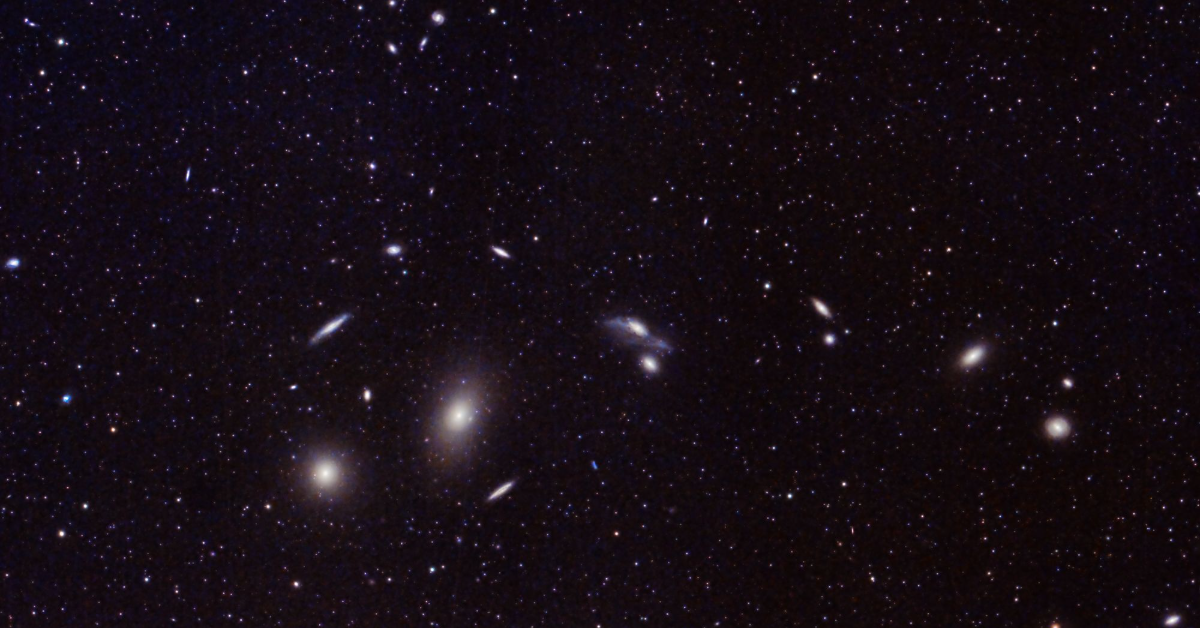
Unlike ordinary matter, dark energy neither emits nor reflects light, nor absorbs light. Scientists cannot see it directly. Instead, they detect its effects by carefully observing distant galaxies.
Key Facts About Dark Energy
Feature Description
Nature Unknown
Share of the Universe Approximately 68%
First evidence 1998
Direct detection None
Main effect Accelerates the expansion of the universe.
Dark energy is an invisible entity that is stretching the fabric of space itself. As space expands, galaxies drift apart. This does not happen because the galaxies are moving rapidly on their own; rather, it occurs because space itself is expanding.
This discovery has completely changed how scientists perceive the universe. To gain a better understanding of the universe’s composition, you can read “What Is the Universe Made Of?“, which details the roles of ordinary matter and energy, dark matter, and dark energy.
Why Is It Called Dark Energy?
The word “dark” means unknown.
Scientists use this term because they don’t yet know exactly what dark energy is or where it comes from.
Here, it doesn’t mean dark because it’s black or invisible. Rather, it’s not directly visible.
Dark energy is distinct from the following:
- Ordinary matter
- Dark matter
- Light
- Radiation
- Black holes
Scientists have proposed several theories but have yet to prove any.
How Was Dark Energy Discovered?
What is dark energy? Before understanding it, we need to know how it was discovered. In 1998, scientists made one of the most significant discoveries of the 20th century.
Scientists had expected that gravity would slow the expansion of the universe after the Big Bang.
However, observations revealed the opposite; they found that instead of slowing down, the universe was expanding at an accelerating rate.
Saul Perlmutter, Brian P. Schmidt, and Adam G. Riess received the Nobel Prize in Physics in 2011 for this astonishing discovery.
For more scientific information, visit NASA’s page on dark energy:https://science.nasa.gov/dark-energy/
The 1998 Supernova Discovery
Scientists observed exploding stars known as Type Ia supernovae.
Since the brightness of these supernovae is relatively consistent, astronomers use them as “standard candles” to measure cosmic distances.
When researchers measured distant supernovae, they found them to be farther away than expected.
This implied that the universe was expanding more rapidly than previous models had predicted.
The simplest explanation was that an unknown force was driving the expansion of space.
This force came to be known as dark energy.
Evidence That Dark Energy Exists
What is dark energy? Although dark energy has never been directly observed, several independent pieces of evidence confirm its existence; these are as follows:
Type Ia Supernovae
The first evidence came from Type Ia supernovae.
Scientists can determine cosmic distances with great accuracy based on their estimated brightness.
These observations revealed that:
- The universe is expanding.
- The rate of expansion is increasing.
- Gravity alone cannot explain this behaviour.
Cosmic Microwave Background (CMB)
The Cosmic Microwave Background (CMB) is the oldest light in the universe, dating back to approximately 380,000 years after the Big Bang.
Data from missions such as NASA’s Wilkinson Microwave Anisotropy Probe (WMAP) and ESA’s Planck reveal the composition of the universe:
- 68% Dark Energy
- 27% Dark Matter
- 5% Ordinary Matter
These results strongly support the current cosmological model. If you wish to learn more about the origin of the universe, read “How did the universe begin?”, “What is the Big Bang Theory?”, and “What Is the Cosmic Microwave Background?” on aerospace1st.com.
Baryon Acoustic Oscillations
Further strong evidence comes from Baryon Acoustic Oscillations (BAOs).
These are ancient waves left behind in the early universe.
By measuring the distances between millions of galaxies, astronomers can determine how rapidly the universe has expanded over billions of years.
Observations consistently show this rapid expansion.
Along with supernova and CMB measurements, BAOs provide solid evidence that dark energy dominates the universe.
How Does Dark Energy Affect the Universe?
What is dark energy? Now, let’s understand how dark energy has the largest-scale effects on the universe.
Its effects on the universe are as follows:
- It accelerates the expansion of the universe.
- It increases the distance between galaxies.
- It shapes the large-scale structure of the universe.
- It determines the long-term future of the universe.
However, dark energy doesn’t have a significant effect inside galaxies and solar systems, because gravity is too strong on small scales.
Instead, it only affects very large scales.
How Does Dark Energy Work?
What is dark energy? Understanding dark energy is one of science’s greatest mysteries, and deciphering exactly how it works is an even greater enigma. Scientists have measured its effects, yet its true nature remains unknown.
Observations to date indicate the following:
- Dark energy acts as a repulsive force.
- It opposes gravity on a cosmic scale.
- While gravity holds matter together, dark energy pushes galaxies away from one another.
- It is causing space to expand rapidly over time.
Imagine a balloon with dots marked on it; as we inflate the balloon, the dots move further apart. This doesn’t happen because the dots are moving across the balloon’s surface, but rather because the surface itself is expanding. Similarly, galaxies are moving away from each other because space itself is expanding.
Unlike gravity—which strengthens where there is a concentration of matter—the effect of dark energy remains uniform throughout the universe; it is distributed everywhere in space, even in the empty regions between galaxies.
Key Characteristics of Dark Energy
Characteristic Description
Invisible It cannot be observed directly
Uniform It appears to be present everywhere in space
Repulsive effect It causes rapid expansion
Unknown origin It has not yet been explained by physics
Dominates the universe It makes up approximately 68% of the universe
Scientists are still trying to determine whether dark energy has remained constant throughout the universe’s history or has changed over time. Future observations may provide the answer.
Dark Energy vs. Dark Matter
People often confuse dark energy with dark matter, but they are distinct entities.
Dark matter acts like an invisible glue that holds galaxies together through gravity. Dark energy functions in almost the opposite way—it accelerates the expansion of the universe.
Feature
Dark Energy
Dark Matter
Can we see it?
No
No
Does it generate gravity?
Appears to oppose gravity on a cosmic scale
Yes
Percentage of the universe
~68%
~27%
Primary role
Accelerates expansion
Holds galaxies together
Direct detection
No
No
Although both are mysterious, they resolve different questions in cosmology.
If you want to learn how these two mysterious components work together to shape our universe, you can read our blog post, ‘What is Dark Matter?‘ at aerospace1st.com.
Leading Theories About Dark Energy
What is dark energy? Scientists have proposed many ideas to explain dark energy, but none have been proven. Yet, each idea provides important information.
The Cosmological Constant
The main reason for this is said to be the cosmological constant, represented by the Greek letter Λ (lambda).
Albert Einstein first proposed this idea in 1917 when he formulated his theory of general relativity. At that time, he believed the universe to be static, so he introduced the cosmological constant to balance gravity.
When astronomers discovered that the universe was expanding, Einstein is said to have called it his biggest mistake. Modern observations have shown that his idea was probably correct.
Today, the Lambda CDM model is cosmologists’ standard model and successfully explains many things about the universe.
Quintessence
Another possibility is a theoretical field called quintessence. Unlike the cosmological constant, quintessence varies with time.
If this theory is correct, then:
- Dark energy could become stronger.
- It could weaken in the future.
- It may one day disappear completely.
Astronomers are looking for evidence to distinguish between the constant of quintessence and dark energy.
Modified Gravity
Some scientists argue that dark energy may not exist at all.
They argue that Einstein’s theory of gravity may require modifications at very large distances.
If gravity works differently at billions of light-years from our solar system, then the observed acceleration could be explained without the addition of dark energy.
But so far, Einstein’s General Relativity has successfully passed every experiment. As a result, this idea was less popular.
Vacuum Energy
According to quantum physics, not every space is empty.
In a process called quantum fluctuations, tiny particles are constantly created and disappear.
These fluctuations produce energy in the vacuum.
Many scientists believe that this vacuum energy may be responsible for dark energy.
But the major problem is that the amount of vacuum energy required by quantum theory is much greater than what is observed by astronomers. This is why it is one of the most unsolved problems in physics.
Will Dark Energy Keep Expanding the Universe Forever?
What is dark energy? It is the entity upon whose behaviour the future of the universe largely depends.
Scientists are currently considering several possible scenarios, which are as follows:
The Big Freeze
If dark energy remains constant:
- Galaxies will move further apart.
- New stars will gradually stop forming.
- Existing stars will die out.
- The universe will become cold, dark, and empty.
This situation is called the ‘Big Freeze’ or ‘Heat Death’.
The Big Rip
If dark energy grows stronger over time, the expansion of the universe could become so violent that the following would be torn apart:
- Galaxy clusters
- Individual galaxies
- Solar systems
- Planets
- Stars
- Even atoms
This startling possibility is known as the ‘Big Rip’.
While this concept is intriguing, there is currently no evidence that it will happen.
The Big Crunch
If dark energy weakens or reverses, gravity could eventually overcome the expansion of the universe.
Then the universe could eventually stop expanding and begin to collapse in on itself.
This hypothetical end is called the Big Crunch.
Current observations make this outcome difficult, but scientists are working on it.
How Scientists Study Dark Energy
What is dark energy? Dark energy cannot be directly observed, so scientists study its effects on the universe.
Several powerful observatories are helping to solve this mystery.
Some of those missions are:
- ESA’s Euclid Space Telescope
- NASA’s Nancy Grace Roman Space Telescope
- Vera C. Rubin Observatory
- Dark Energy Spectroscopic Instrument (DESI)
These projects map millions of galaxies to understand how the expansion of the universe has changed over billions of years.
By comparing galaxy distances at different times, researchers hope to determine whether dark energy changes or remains the same.
Why Understanding Dark Energy Is Important
What is dark energy? Dark energy is not just another mystery. It could completely change our understanding of physics.
Understanding dark energy could help scientists answer these questions:
- Why is the universe expanding rapidly?
- What is most of the universe made of?
- What will be the future of the universe?
- Does Einstein’s theory fully explain gravity?
- Are there any other unknown laws of physics?
Answers to these questions could lead to revolutionary discoveries about the fundamental nature of space, time, and reality itself.
For more scientific information, visit NASA’s page on dark energy: https://science.nasa.gov/dark-energy/
Frequently Asked Questions (FAQs)
What is dark energy in simple words?
Dark energy is an unknown form of energy that cannot be seen; it permeates space and is causing the universe to expand rapidly over time. Its effects can only be observed by studying distant galaxies and the vast structure of the universe.
How much of the universe is made of dark energy?
According to the Lambda-CDM cosmological model, dark energy accounts for 68% of the universe.
Component Percentage
Dark Energy 68%
Dark Matter 27%
Ordinary Matter and Energy 5%
Is dark energy the same as dark matter?
No, dark energy and dark matter are completely different.
- Dark matter generates gravity and helps hold galaxies together.
- Dark energy causes the universe to expand rapidly.
Although both are invisible and mysterious, their effects on the universe are diametrically opposite.
For more information, you can read ‘What Is Dark Matter?‘ at aerospace1st.com.
Can scientists detect dark energy directly?
Not yet.
Scientists cannot observe dark energy directly because it neither emits, absorbs, nor reflects light; they can only observe its effects.
Who discovered dark energy?
Dark energy was discovered by Saul Perlmutter, Brian P. Schmidt, and Adam G. Riess in 1998.
Will dark energy eventually destroy the universe?
Scientists are still investigating this question.
Conclusion
What is dark energy? Dark energy is one of the most fascinating and mysterious components of the universe. Although it cannot be directly observed or measured, decades of research indicate that it is the driving force behind the universe’s rapid expansion. Current evidence suggests that dark energy accounts for 68% of the universe.
Despite tremendous advancements in astronomy and cosmology, scientists still do not know exactly what dark energy is. Theories such as the cosmological constant, quintessence, and modified gravity offer potential explanations, but none have been conclusively proven.
As observatories like the Euclid Space Telescope, the Nancy Grace Roman Space Telescope, and the Vera C. Rubin Observatory gather more data, scientists hope to uncover the true nature of dark energy and answer some of science’s biggest questions.
For Deep knowledge, please visit:https://www.nasa.gov/
Pingback: What Is the Cosmic Microwave Background? 15 Amazing Facts About the Universe’s Oldest Light -