
Introduction
What is the Big Bang Theory? Have you ever gazed up at the night sky and wondered how this universe was formed—how it all began?
This is a question we have long sought to ask and answer; scientists, philosophers, and astronomers have devoted generations to deciphering the origins of the cosmos. Today, the most renowned scientific explanation is the Big Bang Theory.
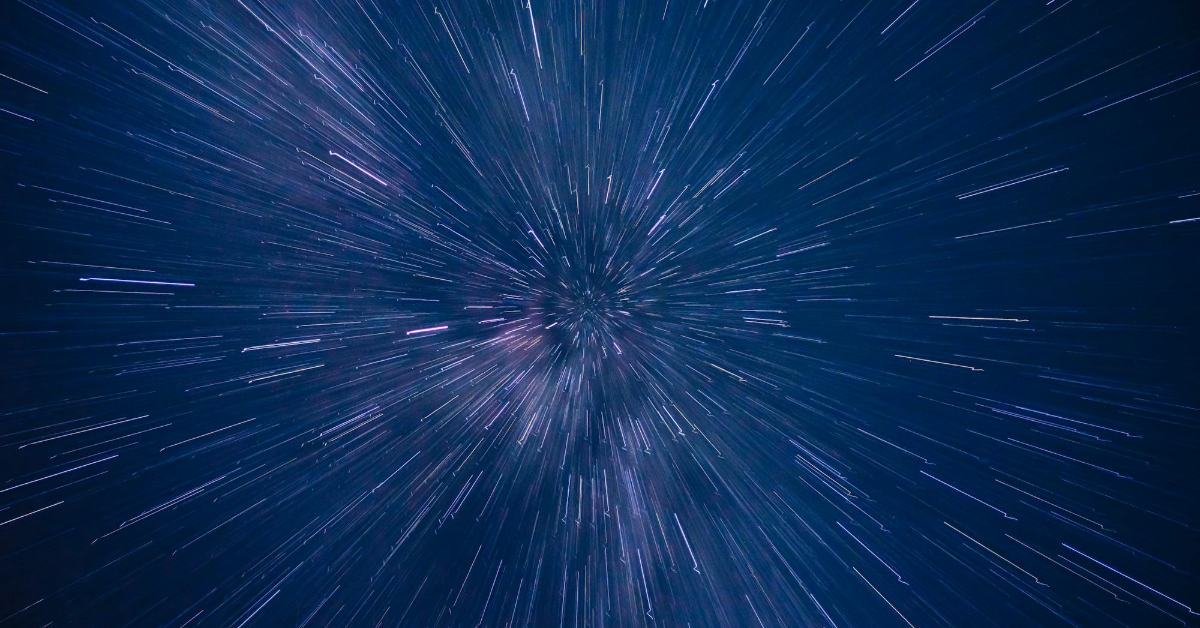
According to the Big Bang Theory, the universe originated approximately 13.8 billion years ago from a hot and dense state. Following this, space underwent rapid expansion, and over time, galaxies, stars, planets, and everything else we observe today gradually took shape.
While some people mistakenly believe that the Big Bang was merely a massive explosion in space, the reality is that it was the rapid expansion of space itself.
This theory continues to serve as the fundamental basis of modern cosmology. This supports the observations of NASA and the European Space Agency (ESA).
Table of Contents
What Does the Big Bang Theory Mean?
What is the Big Bang Theory? The Big Bang Theory is the theory that explains the origin of the universe, positing that it began as a very small, extremely dense point and has been expanding since.
Imagine a balloon with dots drawn on it; when we inflate this balloon:
- The dots on the balloon move away from one another.
- The surface of the balloon expands.
- There is no single central point.
Similarly:
- Galaxies move away from one another.
- Space is continuously expanding.
- The universe is still growing today.
According to scientists, the observable universe spans approximately 93 billion light-years.
The Big Bang remains the foundation of modern cosmology.
Who Proposed the Big Bang Theory?
Georges Lemaître and the Primeval Atom
What is the Big Bang Theory? The Big Bang Theory was first proposed in 1927 by the Belgian physicist Georges Lemaître. He explained that the universe originated from a single primeval atom, which expanded and cooled.
- Initially, in 1927, Lemaître published a research paper in which he established this model. Later, in 1929, this model received support from Edwin Hubble’s observations regarding the recession of galaxies.
- This theory is based on Albert Einstein’s General Theory of Relativity, which Lemaître used to demonstrate that the universe is not static.
- The term “Big Bang” was used in 1949 by the astronomer Fred Hoyle. Interestingly, Hoyle himself did not invent this theory.
Edwin Hubble’s Discovery
In 1929, Edwin Hubble discovered that galaxies are moving away from Earth. This observation revealed that the universe is expanding.
Later, observations made by the Hubble Space Telescope confirmed that the universe is expanding.
What Existed Before the Big Bang?
What is the Big Bang Theory? Along with this question, another question arises: What existed before the Big Bang? This remains one of science’s greatest mysteries.
The following possibilities may exist:
- It is possible that nothing existed before the Big Bang.
- It is possible that a multiverse existed.
- It is possible that a cyclic universe existed.
- Quantum fluctuations initiated the creation.
Scientists still do not have a definitive theory.
For now, the multiverse remains merely a theoretical concept.
How Did the Big Bang Happen?
The Singularity Concept
In the beginning
- The temperature was extremely high.
- The density was beyond our imagination.
- The laws of physics likely operated differently.
E=mc²
This famous equation by Albert Einstein helps in understanding the energy transformations in the early universe.
Cosmic Inflation
What is the Big Bang Theory? Once this question is answered, another question arises: What is cosmic inflation? A tiny fraction of a second after the Big Bang: following incidents happened
- The universe expanded very rapidly (faster than the speed of light).
- Matter spread rapidly.
- The temperature dropped.
Cosmic inflation accounts for this initial rapid expansion.
Timeline of the Big Bang
Time After Big Bang
0 seconds
10^(-36) seconds
3 minutes
380,000 years
100 million years
1 billion years
13.8 billion years
Event
Universe begins
Inflation starts
First nuclei form
Atoms form
First stars appear
Galaxies begin forming
Present universe
First Seconds
During the first few seconds, the following fundamental particles were formed:
- Quarks were formed
- Protons developed
- Neutrons emerged
Everything was scattered.
Formation of Atoms
After 380,000 years:
- Electrons combined with nuclei
- Hydrogen was formed
- Helium was formed
Ultimately, light could travel freely.
Birth of Stars and Galaxies
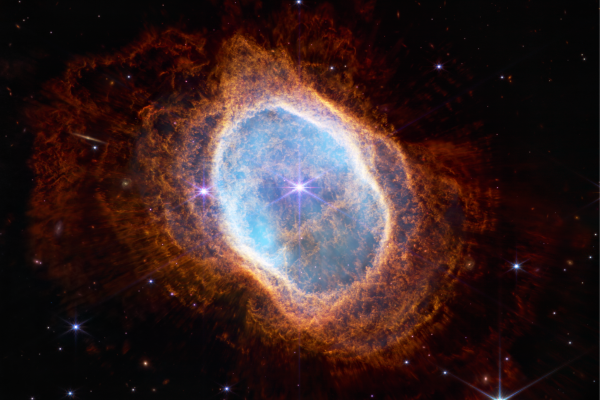
Gravity pulled matter together to create the following structures:
- Stars
- Galaxies
- Solar Systems
- Planets
And Earth was formed.
Evidence That Supports the Big Bang Theory
Cosmic Microwave Background Radiation
What is the Big Bang Theory? Once this question is answered, the theory that supports this concept is the Cosmic Microwave Background Radiation, which was discovered in 1965 by Arno Penzias and Robert Wilson.
This radiation is often referred to as the “afterglow” of the Big Bang.
Redshift of Galaxies
When galaxies move away:
- Light stretches
- Wavelength increases
- Light shifts red
This supports cosmic expansion.
v = H₀ × d
This represents Hubble’s law
Abundance of Light Elements
Scientists observed the estimated quantities of the following substances:
- Hydrogen
- Helium
- Lithium
These match the calculations of the Big Bang.
Common Misconceptions About the Big Bang
Many people believe:
- It was an explosion in space
- It explains what caused existence
- It happened at one location
Truthfully:
- Space itself expanded
- Science still investigates the cause
- The event happened everywhere simultaneously
Will the Universe End?
Scientists propose several endings:
Big Freeze
The universe expands forever.
Big Crunch
Expansion reverses.
Big Rip
Dark energy tears everything apart.
Dark energy plays a major role.
If you want to know more information about Dark Energy and Dark Matter, please visit our blog post ‘What is Dark Energy?‘ And ‘What is Dark Matter?‘ at aerospace1st.com
Big Bang Theory vs Other Universe Origin Theories
Theory
Big Bang
The Steady State
Oscillating Universe
Simulation Theory
Explanation
The universe began from a dense state
The universe always existed
Endless expansion and collapse
The universe may be artificial
The Steady-state model lost popularity after major discoveries.
Frequently Asked Questions (FAQs)
How old is the universe?
Scientists estimate it is about 13.8 billion years old.
Did the Big Bang create Earth?
No. Earth formed billions of years after the Big Bang.
Can the Big Bang happen again?
Some cyclic universe theories suggest that possibility.
What caused the Big Bang?
Scientists don’t yet know.
Was there time before the Big Bang?
Time may have started during the Big Bang itself.
Is the Big Bang theory proven?
It is strongly supported by evidence, but science remains open to new discoveries.
Conclusion
What is the Big Bang Theory? The Big Bang Theory is, to date, the most compelling argument explaining how the universe originated.
From an extremely small, hot, and dense state to the formation of billions of galaxies, this cosmic journey has truly been fascinating.
And honestly speaking, we continue to discover new mysteries about the universe every year.
As NASA’s James Webb Space Telescope continues to uncover new information about space, our understanding of the universe may well evolve.
The story of the universe is still a long way from its conclusion.
For more information, visit https://www.nasa.gov/
Pingback: What Is the Cosmic Microwave Background? 15 Amazing Facts About the Universe’s Oldest Light -
Pingback: What Is Dark Energy? 11 Amazing Facts About The Mysterious Force Expanding the Universe -
Pingback: What Is Space Made Of? 13 Astonishing Components That Fill the Vast Cosmos -