
Introduction
What is the Milky Way Galaxy? It is a gravitationally bound system that includes stars, planets, gas, dust, star clusters, and dark matter. The Sun and our entire solar system exist within it.
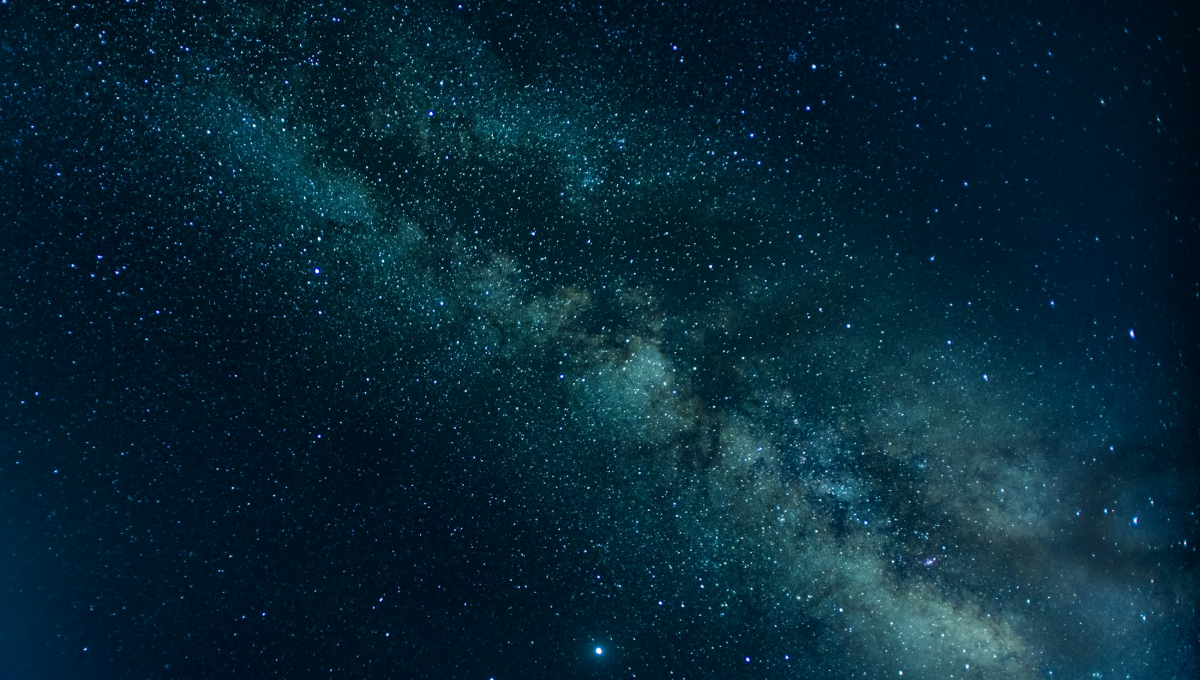
To recognise its presence, when you look up at the sky in the dark of night, a faint white band across the sky may appear like a cloud of light. In fact, that bright band is visible within our own galaxy, the Milky Way Galaxy.
The Milky Way Galaxy is a barred spiral galaxy, whose star-filled disk is more than 100,000 light-years wide. Earth is located approximately halfway between the centre of the galaxy and the outer reaches of the disk. Our solar system also takes approximately 240 million years to orbit the centre of the galaxy.
This makes the Milky Way a vital link between the cosmic region around us and the larger universe.
If you’re new to astronomy, it’s helpful to first understand what the universe is and what the universe is made of. The Milky Way is just one large part of that much larger cosmic story.
Table of Contents
What Is the Milky Way Galaxy?
What is the Milky Way galaxy? It is the galaxy containing our solar system, consisting of stars and other matter bound together by gravity.
Scientists have classified this galaxy as a barred spiral galaxy. This refers to a flat, rotating disk featuring spiral arms and a central, bar-like structure composed of stars.
According to NASA, the Milky Way’s stellar disk spans more than 100,000 light-years and contains a vast number of stars; scientific estimates place this figure anywhere from 100 billion to several hundred billion.
The Milky Way is not merely a collection of stars; it possesses a complex structure comprising the following elements:
- Stars
- Planets
- Nebulae
- Gas
- Cosmic dust
- Star clusters
- Black holes
- Dark matter
- A supermassive black hole at the centre
Studying the Milky Way’s structure is challenging because we live inside it; imagine standing in a city and trying to comprehend its overall layout.
Consequently, scientists construct images of the galaxy by utilising data gathered from various telescopes and space missions.
How big is the Milky Way?
What is the Milky Way galaxy? The Milky Way is huge. Its starry disk is over 100,000 light-years across. A light-year is the distance light travels in a year—about 9.46 trillion kilometres.
This means that even at the speed of light, it would take more than 100,000 years to traverse its starry disk. To put this in perspective, consider that sunlight takes only 8 minutes and 20 seconds to reach Earth.
You might be even more amazed to learn that this starry disk is not the entire galaxy. A massive halo also surrounds the Milky Way, containing old stars, star clusters, and dark matter.
To understand these figures in proper context, read our article on how big the universe is.
How Many Stars Are in the Milky Way?
What is the Milky Way galaxy? The Milky Way is immense, making it difficult for scientists to count every single star. Because dust obscures certain regions, distant stars are hard to detect, and many stars are very faint. As a result, astronomers estimate the total number of stars using statistics.
According to NASA, the total number of stars ranges from 100 billion to 400 billion.
The European Space Agency’s Gaia mission has dramatically improved our understanding of the Milky Way. Operating from the second Lagrange point (L₂), it mapped the precise positions, distances, movements, and properties of roughly 2 billion stars, creating the most accurate 3D map of the Milky Way.
How Long Does It Take to Cross the Milky Way?
If we were to cross the main stellar disk at the speed of light, it would take over 100,000 years.
But we humans are simply incapable of travelling that fast. With current spacecraft technology, crossing the Milky Way would take an extremely long time- unimaginable.
This explains why scientists use light-years instead of kilometres when talking about galactic distances.
What Type of Galaxy Is the Milky Way?
What is the Milky Way Galaxy? The Milky Way is a barred spiral galaxy.
A spiral galaxy has a flat disk with a central cluster of stars and spiral structures extending outwards.
A barred spiral galaxy has a distinct characteristic: a central bar of stars crossing the central region.
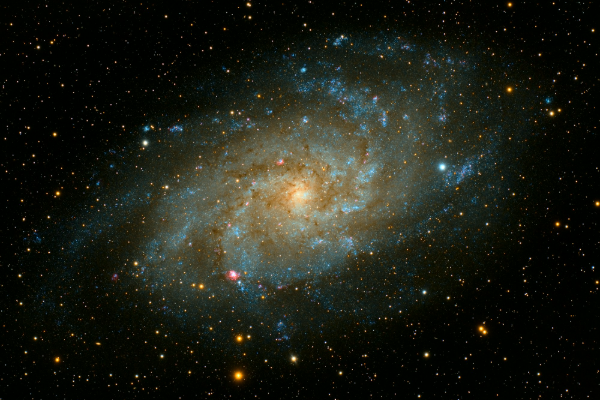
The Milky Way features this bar-shaped structure, with spiral arms extending from the central region. NASA describes the Milky Way as a barred spiral galaxy, while modern observations have helped astronomers refine their understanding of its complex spiral structure. It is this very structure that places our galaxy in the same group as the Andromeda galaxy and other spiral galaxies.
However, no two galaxies are alike.
Some galaxies are elliptical, others are irregular, and some possess unusual shapes formed by gravitational interactions.
You can learn about the vast population of galaxies in our post, ‘How many galaxies are there in the universe?‘ on aerospace1st.com.
Structure of the Milky Way
What is the Milky Way galaxy? To grasp this, one must first look at its main parts; doing so makes it easier to understand the Milky Way itself.
The Galactic Centre
At the centre of the Milky Way is a very dense region called the galactic centre.
It contains a large number of stars and the supermassive black hole Sagittarius A*.
Because gas and dust particles block visible light from the centre, scientists use infrared, radio, and X-ray observations to study it.
NASA observations show that the stellar environment at the centre is very dense.
The Galactic Bulge
Surrounding the central region is the galactic bulge.
It contains many old stars and is roughly elongated in shape. According to ESA, the Milky Way’s central bulge is part of its ‘barred structure’.
Compared to the region around our solar system, the stars in this bulge are much denser.
The Galactic Disk
The galactic disk is the flat region where most of the Milky Way’s stars, gas, and dust are found.
It contains spiral arms, and this is the region we typically picture when we imagine the Milky Way from above.
The disk’s diameter is approximately 100,000 light-years, but the core star-bearing region is only about 1,000 light-years thick.
The Spiral Arms
The spiral arms of the Milky Way contain concentrations of stars, gas, and dust.
Our Sun is located within a smaller spiral structure known as the ‘Orion Arm’ (also called the ‘Orion Spur’), which is situated between the larger spiral structures.
These regions are significant because dense clouds of gas can collapse to form new stars.
The Stellar Halo
The stellar halo lies beyond the main disk.
It contains old stars and globular clusters and extends far beyond the visible disk. ESA estimates the radius of the stellar halo to be approximately 100,000 light-years.
It appears that the Milky Way is surrounded by an even larger halo, dominated by invisible dark matter.
Sagittarius A*: The Black Hole at the Centre
What is the Milky Way galaxy? The Milky Way is a galaxy with a supermassive black hole at its centre, known as Sagittarius A*. Sagittarius A* has a mass approximately 4 million times that of our Sun.
A black hole doesn’t act like a vacuum cleaner, sucking in everything that comes near it. If objects are at the right distance and at the right speed, they can safely revolve around the black hole.
Stars near Sagittarius A* are orbiting in paths strongly affected by its gravity. Studying the orbits of these stars has provided strong evidence of the black hole’s mass.
Compared with black holes in other galaxies, it appears to be quite quiet.
For readers interested in invisible celestial bodies, our article “What is Dark Matter?” may be useful for further reading.
Where Is Earth in the Milky Way?
What is the Milky Way galaxy? Along with learning about the Milky Way, it is also interesting to learn about our Earth; our Earth is not located near the centre. Our solar system is situated about 26,000 light-years from the galactic centre, roughly halfway between the centre and the outer edges of the main disk.
The Sun is located in the Orion Arm, a minor spiral arm of the galaxy.
This location is significant because our solar system is not in a highly crowded region; instead, it is in a comparatively quiet part of the galactic disk.
The entire solar system orbits the centre of the galaxy. A single complete orbit takes about 240 million years.
This means that the last time our solar system was in roughly the same position in its galactic orbit as it is now, Earth looked dramatically different.
What Is the Milky Way Made Of?
What is the Milky Way galaxy? The Milky Way is not a galaxy made solely of stars; ordinary matter and dark matter are present in most of its regions.
Stars and Star Clusters
Visually, stars make up a vast, visible portion of the Milky Way.
These stars vary in age, size, temperature, and composition. Some are young and hot, while others are billions of years old.
Stars can also exist in groups known as star clusters.
Among these, globular clusters are particularly interesting; many contain ancient stars that orbit within the Milky Way’s halo.
Gas and Cosmic Dust
The space between stars—interstellar space—is not entirely empty. It contains massive clouds of gas and tiny particles of dust.
Hydrogen is the most abundant element in interstellar space. Gas clouds can collapse under gravity to form new stars. Dust also plays a crucial role; because it can block visible light, scientists use infrared observations to study regions hidden behind these clouds.
To learn more, see ‘What is space made of?‘ on aerospace1st.com.
Dark Matter
According to scientists, the Milky Way is surrounded by a vast halo of dark matter.
As we know, dark matter neither emits nor reflects light in the conventional sense, so it cannot be directly imaged by telescopes.
Instead, scientists detect its presence through its gravitational effects—specifically by observing how stars and other objects move. According to ESA, the visible structures of the Milky Way are embedded within a vast halo of dark matter.
If you are learning about this topic from the beginning, continue reading from ‘What is dark matter?‘.
How fast does the Milky Way rotate?
As we know, the Milky Way is rotating.
But it doesn’t rotate like a solid wheel, with every point completing one revolution at a fixed speed.
Different parts of the galaxy rotate at different speeds around the centre. Our solar system orbits the Milky Way very quickly, but the galaxy is so vast that it takes about 240 million years to complete one revolution.
Scientists carefully study this rotation because the motion of stars and gas provides important information about the distribution of matter, including dark matter.
How old is the Milky Way?
What is the Milky Way galaxy? To understand this, it is essential to know that it is very old. Its formation began billions of years ago during the early history of the universe, and it was not the result of a single event. The Milky Way was formed through a long process of star formation, the influence of gravity, and the merging and gathering of smaller systems.
Some stars and globular clusters within the Milky Way are also very old.
To understand its broader timeline, read “How old is the universe?“
Thus, the history of the Milky Way is part of the larger story of the universe’s evolution.
How did the Milky Way form?
What is the Milky Way galaxy? To understand this, it is essential to know how it formed; understanding its formation is a key part of grasping what the Milky Way actually is. Its history is complex, but astronomers believe that galaxies form and grow through a combination of various processes. Early in the history of the universe, matter began to clump together due to gravity.
Over time, these structures grew larger. Gas accumulated in gravitationally bound regions, stars formed, and smaller galaxies and star systems merged with or were absorbed into larger galaxies.
Thus, it is not necessarily the case that the Milky Way originated in the form we see today—as a fully developed ‘barred spiral galaxy.’
Its current structure is the result of billions of years of evolution.
“This is directly linked to the fundamental question of how the universe began and how cosmic structures evolved following the early universe. To explore the literal evidence of this early universe, read our article “What Is the Cosmic Microwave Background?” on aerospace1st.com.”
The Milky Way and Andromeda
What is the Milky Way Galaxy? The Milky Way is part of a group of galaxies called the ‘Local Group’. The Milky Way is not alone. According to NASA, the Local Group contains more than 50 galaxies, ranging from small dwarf galaxies to the large Andromeda Galaxy.
Andromeda is the closest large galaxy to the Milky Way.
Both are spiral galaxies, and both contain a large number of stars.
Studying Andromeda also helps astronomers understand our own galaxy. Because we are looking at another large spiral galaxy from outside,
This is also useful because we cannot simply go outside the Milky Way and take a photo of it.
Will the Milky Way Collide With Andromeda?
The Milky Way and Andromeda are interacting due to gravity.
A collision is expected in the future, although the timing and details will depend on their speeds and other gravitational effects.
A collision between galaxies does not necessarily mean that individual stars will collide with each other.
The distances between stars are enormous. Instead, gravitational forces can completely alter the shape of galaxies, disrupting their structures and altering the process of star formation. This is why galaxies should not be considered static entities. They are constantly changing.
To learn more about the universe, read ‘Is the Universe Infinite?‘ on aerospace1st.com.
Can We See the Milky Way From Earth?
Yes, we can see the Milky Way with our own eyes.
If we are far from city lights and the sky is sufficiently dark, the Milky Way appears as a faint, hazy band across the night sky.
What you see is the combined light of numerous distant stars located within the galaxy’s disk.
We are viewing the galaxy from inside the disk, providing a perspective vastly different from the images or artistic illustrations of the Milky Way seen from above.
Dust obscures some visible light, creating dark patches across the luminous band.
Contemporary scientists overcome this limitation by observing the galaxy across various wavelengths.
For example, infrared and radio observations can reveal structures that are not easily detected by visible-light telescopes.
Why Is the Milky Way Important?
What is the Milky Way galaxy? The Milky Way galaxy is home to our cosmic neighbourhood. Every planet in our solar system—including Earth—is located within it. That is why studying the Milky Way is important. Studying the Milky Way provides us with insights into the following:
- How galaxies form
- How stars form
- How stars die
- How planets form
- How black holes affect galaxies
- How dark matter influences galactic motion
- How galaxies evolve
- How our solar system is situated within the vast universe
The Milky Way serves as a natural laboratory for astronomers because it is easier to study its individual stars in detail compared to those in distant galaxies.
ESA’s Gaia mission has conducted extensive work in this area. During its mission, Gaia has made over 3 trillion observations of approximately 2 billion stars and other objects, helping to create a highly detailed map of our galactic neighbourhood.
For more reliable information, you can check out NASA’s overview of the Milky Way.
15 Fascinating Facts About the Milky Way
What is the Milky Way galaxy? To know about milky way Here are some key facts about the Milky Way galaxy; these are as follows:
• The Milky Way is the galaxy that contains Earth and the Solar System.
• It is classified as a ‘barred spiral galaxy’.
• Its main stellar disk spans more than 100,000 light-years.
• This galaxy contains anywhere from approximately 100 billion to several hundred billion stars.
• Our Sun is just one ordinary star among this vast number of stars.
• Earth is located approximately 26,000 light-years away from the galaxy’s centre.
• The Solar System is situated in the ‘Orion Arm’ (or ‘Orion Spur’).
• ‘Sagittarius A*’ is a supermassive black hole located at its centre.
• The mass of ‘Sagittarius A*’ is equivalent to approximately 4 million Suns.
• The Milky Way contains vast amounts of gas and cosmic dust.
• The galaxy is surrounded by a ‘halo’ containing dark matter.
• It takes our Solar System approximately 240 million years to orbit the galaxy’s centre.
• The Milky Way is part of the ‘Local Group’ of galaxies.
• ‘Andromeda’ is the nearest large galaxy to us.
• We can see the Milky Way from Earth on a dark night.
Frequently Asked Questions
What is the Milky Way galaxy?
The Milky Way is the large barred spiral galaxy that contains our Solar System. It consists of stars, planets, gas, dust, star clusters, black holes, and dark matter.
How many stars are in the Milky Way?
Astronomers estimate that the Milky Way contains roughly 100 billion to 400 billion stars. The exact number is uncertain because many stars are too faint or obscured by gas and dust to count individually.
How big is the Milky Way galaxy?
The main stellar disk of the Milky Way is more than 100,000 light-years across. Its larger halo extends considerably farther.
Where is Earth in the Milky Way?
Earth is located in the Solar System, about 26,000 light-years from the centre of the Milky Way. Our Solar System lies within the Orion Arm, or Orion Spur.
What is at the centre of the Milky Way?
A supermassive black hole called Sagittarius A* lies at the centre of the Milky Way. It has a mass approximately four million times that of the Sun.
Is the Milky Way the only galaxy?
No. The Milky Way is just one galaxy among an enormous population of galaxies in the observable universe.
Our article, How Many Galaxies Are There in the Universe? explores this much larger cosmic population.
Conclusion
What is the Milky Way galaxy? It is our vast cosmic home—a ‘barred spiral galaxy’ comprising billions of stars, massive clouds of gas and dust, star clusters, black holes, planets, and a large halo of dark matter.
Our solar system is located about 26,000 light-years from the galaxy’s centre, within a small spiral structure known as the ‘Orion Arm.’ At the galaxy’s core lies ‘Sagittarius A*,’ a supermassive black hole with a mass approximately 4 million times that of the Sun.
Yet, the Milky Way is just one part of the vast universe.
Once you understand our galaxy, the next natural question is how it fits into the cosmic web of galaxies, dark matter, dark energy, and expanding space. Our existing articles on the universe, what the universe is made of, dark matter, dark energy, and what space is made of provide excellent supporting content for that journey.
The more we learn about the Milky Way, the clearer one thing becomes: even though Earth may seem huge to us, our planet is merely a tiny world orbiting an ordinary star within a vast galaxy—and that galaxy itself is but a minuscule fraction of the observable universe.
For more information, please visit https://www.nasa.gov/
Pingback: How Many Galaxies Are There in the Universe? 10 Incredible Facts You Need to Know -
Pingback: What Is Space Made Of? 13 Astonishing Components That Fill the Vast Cosmos -
Pingback: What Is Dark Matter? 7 Mind-Blowing Facts That Could Change Our Understanding of the Universe -
Pingback: What Is the Observable Universe? 7 Mind-Blowing Facts -
Pingback: What Is the Cosmic Microwave Background? 15 Amazing Facts About the Universe’s Oldest Light -