
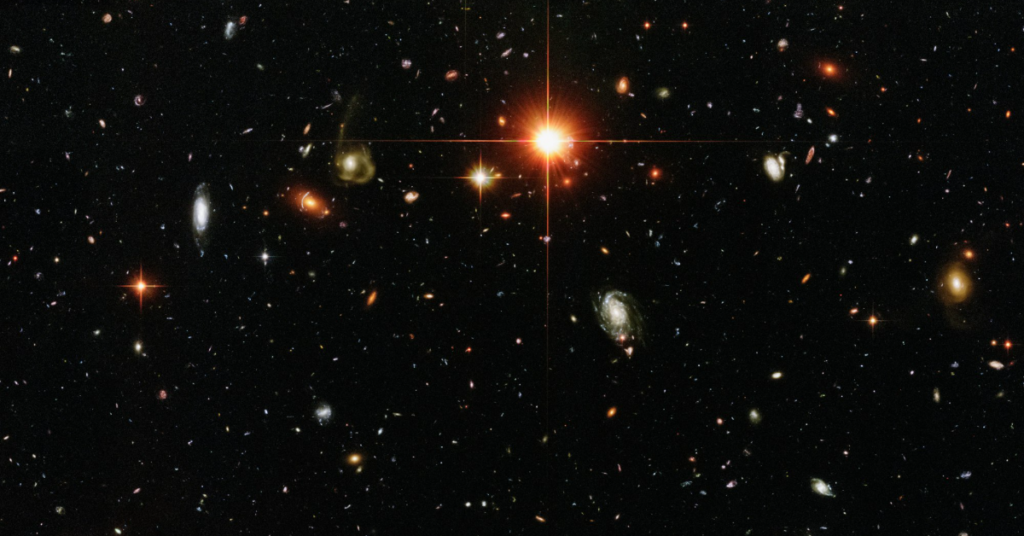
Introduction
What is the Universe? Humans are curious about what the universe is.
From our ancestors gazing at the night sky to today’s scientists using powerful telescopes, humans have always asked the question: What is the universe?
This desire to know what the universe is not is a new phenomenon. It has always been a part of human curiosity.
When we look at the night sky, we don’t just see stars; we see a great mystery, a vast expanse in which we try to find our place.
In simple terms, the universe is everything that surrounds us. It includes space, matter, energy, time, galaxies, stars, planets, moons, and even the invisible forces that hold these things together.
Table of Contents
What is the Universe?
What is the universe? -The universe has everything that exists, including space, time, energy, and matter, encompassing all galaxies, stars, planets, moons, and even things that humans haven’t yet discovered.
Scientists define the universe as the totality of all physical existence. This includes:
• Space and time
• Energy and matter
• The laws of physics that govern them
Using the techniques of astronomy, astrophysics, and cosmology. Scientists explain how the universe formed, how it behaves, and how it is continuously changing.
philosophical meaning of the universe
Philosophically, the universe is much more than just physical things.
Thinkers often ask Why does the universe exist? What is its purpose? And what is our role in it?
Philosophy always focuses on the “why,” while science always focuses on the “how.” If they work together, we can understand the universe deeply.
How did the universe begin?
To understand the beginning of the universe, scientists proposed the Big Bang theory. According to this theory, the universe began approximately 13.8 billion years ago. The universe originated from a very dense and hot point, after which space expanded very rapidly. This was an expansion of space itself, not an explosion. Following this expansion, the matter cooled down, and then stars and galaxies formed.
What Existed Before the Big Bang?
Here’s the tricky part: we don’t really know. Time itself began with the Big Bang, so asking “before” may not even make sense. Some theories suggest:
• Multiple universes (multiverse theory)
• Cyclic universes that expand and collapse
• Quantum origins beyond current understanding
Science is still digging into these mysteries, and honestly, that’s what makes it exciting.
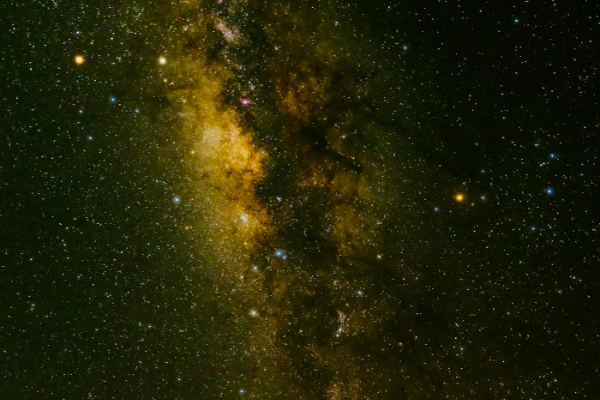
What is the universe made of?
What is the Universe? The universe has three main components: ordinary matter and energy, Dark matter, and dark energy.
Ordinary matter and energy: The more we think about the universe, the more we realise how little we know. So far, we’ve only been able to observe stars, planets, moons, and humans. But in reality, this is only a tiny fraction of the universe. All of this is made up of ordinary matter and energy. And this accounts for only 5% of the universe.
What we cannot see is called dark matter and dark energy.
Dark matter: Dark matter holds our galaxies together; otherwise, they would fly apart. It contributes approximately 27% of the composition of our universe.
Dark energy: It has a completely different function; it is responsible for the continuous expansion of our universe. It accounts for approximately 68% of the universe.
In short:
Ordinary matter and energy ~ 5%
Dark matter ~ 27%
Dark energy ~ 68%
“Here, we will take a deep dive into what the Universe is made of, the nature of Space, and the mysteries of Dark Matter and Dark Energy.”
Structure of the Universe
The universe is a transcendental structure that is governed by specific laws.
The universe includes the following structures: galaxies, nebulae and black holes.
Galaxies
Primarily contain gases, dust, stars, and dark matter.
These are mainly of the following types: spiral galaxies, elliptical galaxies, lenticular galaxies, irregular galaxies, active galaxies, Seyfert galaxies, quasars, and blazars.
Stars and the Solar System
Stars are mainly composed of gas and dust, and planets revolve around them. The sun, planets, and moons together form the solar system. This solar system is a small part of our Milky Way galaxy.
Nebulae
Nebulae, in a way, are nurseries for stars, where stars are born.
Black holes
Black holes are characterised by not allowing even light to escape from within them.
How big is the universe?
According to current knowledge, the universe extends for 93 billion light-years.
Is the universe infinite?
Humans have not yet definitively determined whether the universe is infinite or finite; some scientists believe it may be infinite or finite but unbounded
The Laws Governing the Universe
The laws that the universe follows are as follows:
• Gravity
• Space-time
All structures, such as galaxies, stars, and planets, are formed by gravity. If there were no gravity, these structures would not be able to form in the universe.
The forces that control these structures are the gravitational force, the electromagnetic force, the strong nuclear force and the weak nuclear force.
According to scientists, space-time and gravity are interconnected. Massive objects use gravity to bend space-time.
Humanity’s Place in the Universe
Humans live on a small planet, Earth, which orbits an average star that we call the Sun. The Sun is a small part of our galaxy, and our galaxy is one of billions of galaxies. According to current scientific knowledge, Earth is the only place where humans can live.
Are we alone?
Yes! According to current scientific knowledge, humanity is alone in the universe. Scientists are using radio signals to explore exoplanets and send missions to Mars and icy moons, but till now, no signs of life have been found anywhere other than Earth. Scientists’ search for life continues.
The Importance of Studying the Universe
• Advances in technology.
• Improves physics and mathematics.
• Helps to understand the future of Earth.
• Encourages humility and curiosity. It inspires art and literature by providing a vast, mysterious, and awe-inspiring canvas that transforms human perspective, fosters wonder, and offers metaphors for existence.
Frequently Asked Questions (FAQs)
1. What is the universe in simple words?
The universe is everything that exists—space, time, stars, planets, and all matter and energy.
2. How old is the universe?
The universe is approximately 13.8 billion years old.
3. Is the universe still expanding?
Yes, and its expansion is accelerating due to dark energy.
4. What is the difference between a universe and a galaxy?
A galaxy is a collection of stars and planets, while the universe contains all galaxies.
5. Can we see the entire universe?
No, we can only see the observable universe.
6. Why is the universe important to study?
It helps us understand existence, physical laws, and our place in reality.
Conclusion:
What is the universe? The desire to understand the universe is a curiosity with no end—yet we remain unable to fully comprehend it. Our universe is just that: infinite. We yearn to explore its depths, even as our understanding falls short. Nevertheless, despite its infinite nature, we humans harbour a desire to understand the cosmos. It is this very desire that drives us to discover new things, and these discoveries shape the future of humanity. The human quest to understand the universe will never cease, no matter how vast the universe may be.
For more information
Pingback: What Is the Milky Way Galaxy? 15 Fascinating Facts About Our Cosmic Home -
Pingback: What Is the Cosmic Microwave Background? 15 Amazing Facts About the Universe’s Oldest Light -