
Introduction
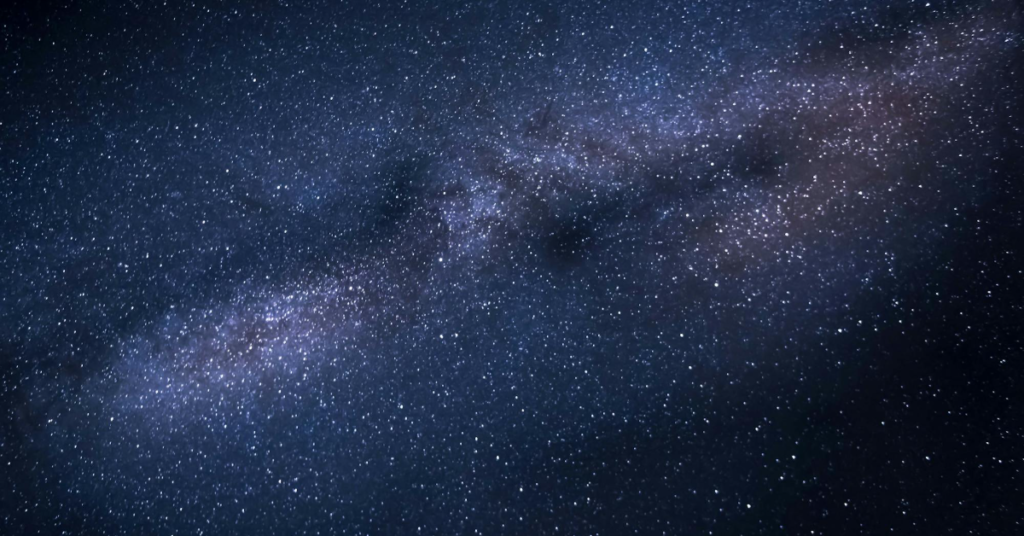
What is the universe made of? This is a question most people have. Today, we’re going to explain it in very simple terms. As scientists have said, the universe was formed about 13.8 million years ago, as we’ve discovered through the Big Bang Theory. The stars we see at night aren’t just stars; they’re the space, time, matter, energy, and force that make everything go. Ever since its birth, the universe has been continuously expanding, cooling, and evolving. But we can’t see the things that make the universe go. Yes, the things we can see and touch are just a small part of what we call the cosmic pie. The cosmic pie is a mixture of ordinary matter and energy, dark matter, dark energy, and the mathematical framework scientists have created to understand our universe.
Table of Contents
Why Understanding the Universe Is Important
What is the universe made of? -Understanding the universe is crucial for us. It’s not a way to gain scientific popularity. It’s a way to understand ourselves. You might be surprised to learn that every element in our bodies was formed by a star that formed billions of years ago. Even GPS, satellites, medical instruments, and our smartphones are made from that same star. This piques our curiosity.
What is the universe made of
What is the universe made of?- According to scientists, the universe is composed of three main components: ordinary matter and energy, dark matter, and dark energy.
If you want to know what space is made of, please visit “What is space made of?”.
Ordinary Matter and Energy: The Building Blocks We Know
Ordinary matter and energy are what we all know and see, such as stars, planets, the moon, humans, and the things we eat. Ordinary matter is basically made up of atoms. An atom consists of three things:
- Proton
- Neutron
- Electron
These atoms combine to form elements such as hydrogen, helium, carbon, and oxygen. The observable universe is mostly hydrogen, followed by helium. Hydrogen and helium serve as fuel for stars to develop light. The remaining matter around stars forms planets. Our Milky Way galaxy contains billions of stars, all held together by gravity. Ordinary matter actually comprises only about 5% of the universe.
Dark matter and Dark energy
What is the universe made of?- Cosmological and astrophysical observations say that most of the universe is made of unidentified and invisible substances. We can not observe it through telescopes because it does not emit electromagnetic radiation, but we can observe it through the gravitational effect. These types of substances are called Dark matter and Dark energy.
Dark Matter
What We Know and What We Think
Although dark matter cannot be seen, we know it exists. We can learn about its properties using gravitational lensing. It bends and magnifies light coming from a distance, revealing information about its quantity, density, and distribution. According to theory, WIMPs are weakly interacting massive particles. These particles should have predictable behaviour, but they are difficult to observe directly.
Evidence for Dark Matter
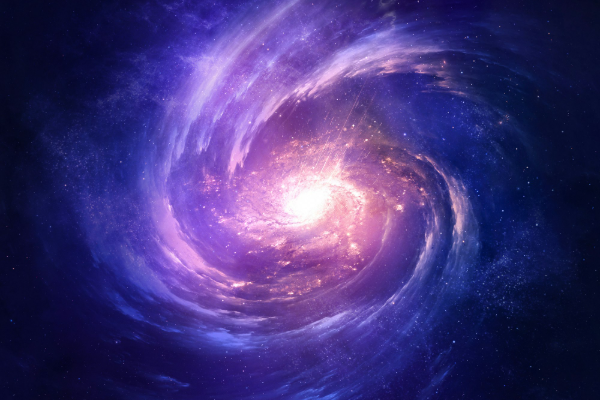
Scientists have noticed that galaxies are spinning much faster than they should be. If we judged only by visible matter, they should have drifted apart by now. But they aren’t. This means something unseen and unknown is holding them together. That something is “dark matter”.
Why Scientists Believe It Exists
We can’t directly observe dark matter because it doesn’t emit light. We can only detect it through its gravitational effects. It acts like cosmic glue, holding galaxies and galaxy clusters together. And this accounts for around 27% of the universe.
Astronomer Fritz Zwicky's observation
In 1933, Astronomer Fritz Zwicky used the virial theorem to describe dark matter. They observed that galaxies in the Coma Cluster were rotating so rapidly that they should have escaped the cluster’s gravitational influence, but this was not happening. They compared the gravitational mass of the cluster needed to keep the galaxy in orbit to the cluster’s visible mass (stars and gas). This difference is about 400 times; the large, invisible part is called “Dark matter”.
Dark energy
Dark energy is even stranger than dark matter.
Discovery of Dark Energy
Scientists observed that the universe isn’t just expanding, but it’s expanding faster over time. This expansion can’t be explained by gravity alone.
How It Shapes the Universe
Dark energy works in the opposite direction of gravity, pushing space itself outward. But dark energy is what controls the universe. And it makes up about 68% of the universe.
What is dark energy doing to the universe?
We’ve known that the Universe is expanding, and we’ve known this for almost the entire 20th century. Observations from distant supernovae and other observations have shown that the Universe is not only expanding, but expanding very rapidly, even though its expansion should be slowing down with time. This unknown force is called dark energy.
If you want to get more information about dark energy, you can read ‘What is Dark Energy?‘ at aerospace1st.com.
Radiation and Energy in the Universe
Cosmic Microwave Background
The cosmic microwave background (CMB) is the low-energy thermal radiations which are evolve after the Big Bang. after 380000 years of the universe’s formation. When it cooled enough to become transparent, this first light provided a snapshot of the universe’s expansion.
Light and the Electromagnetic Spectrum
Light includes
- Microwaves
- Infrared
- Radio waves
- Visible light
- Ultraviolet
- X-rays
- Gamma rays
To study the distance object, this form of light is used.
To learn exactly how scientists mapped this cosmic recipe, check out our deep dive on [what the cosmic microwave background is], the oldest light in the universe.
Space-Time Fabric
Gravity and Relativity
Einstein’s theory tells us that space and time combine to form a fabric called space-time. Large objects bend this fabric, creating gravity.
This explains:
- Black holes
- Gravitational waves
- Time dilation
Space-time isn’t empty—it’s an active part of the universe.
The Role of Quantum Particles
What is the universe made of? Quantum particles act as the keystones behind the formation, structure, and evolution of the Universe. From the moment after the Big Bang until the formation of stars and galaxies, quantum processes determine the distribution of matter and energy.
Quarks, Leptons, and Bosons
- Quarks (build protons and neutrons)
- Leptons (like electrons)
- Bosons (carry forces)
What the Higgs boson discovery says
The Higgs boson was discovered in 2012, which gives information regarding particle mass. It acts as a physical representation of the Higgs field, which spreads all over the universe and provides mass to elementary particles like electrons and quarks.
The Big Bang and Cosmic Evolution
In the beginning, the universe was a dense & hot point. As it expanded, particles formed, atoms formed, stars ignited, and galaxies formed. Over billions of years, complexity increased. And the universe continues to evolve and expand.
Current Theories and Open Questions
Scientists are still exploring:
- What exactly is dark matter?
- Is dark energy constant?
- Are there multiple universes?
We’re trying to learn more about the universe with tools like the James Webb Telescope and the Hubble Space Telescope.
Frequently Asked Questions
1. What percentage of the universe is ordinary matter?
Only about 5% of the universe is ordinary matter.
2. Is dark matter dangerous?
No. It doesn’t interact with humans directly.
3. Can dark energy be measured?
Not directly, but its effects are observed through cosmic expansion.
4. Are we made of star material?
Yes! The elements in our bodies were formed in stars.
5. Is the universe mostly empty?
Yes, but even “empty” space contains energy and particles.
6. Will the universe end?
Possibly—but scientists are still debating how.
Conclusion
What is the Universe made of? An interesting combination of ordinary matter and energy, dark matter, dark energy, radiation, and space-time. We humans have just been created, and what we know about the Universe remains limited. And that’s what makes it interesting, and every discovery opens a new chapter.
For more information, visit https://www.nasa.gov/
Pingback: What Is Space Made Of? 13 Astonishing Components That Fill the Vast Cosmos -
Pingback: What Is the Cosmic Microwave Background? 15 Amazing Facts About the Universe’s Oldest Light -
Pingback: What Is the Milky Way Galaxy? 15 Fascinating Facts About Our Cosmic Home -